
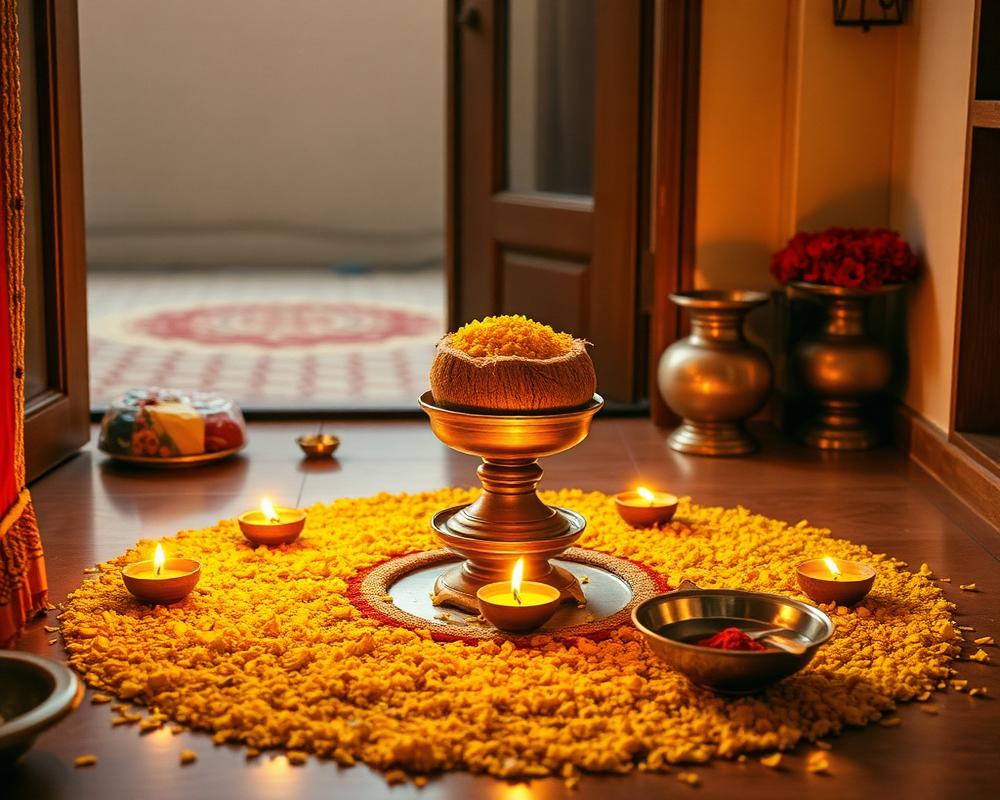
Griha Pravesh — the 21-point checklist before you move in
A new home is a new janma for the family. Do it right — with the correct muhurat, entry direction, kalash sthapna and the first meal cooked on the new stove.
By Pt. Vidya Sagar Mishra · 18 February 2026
In 25 years of Vastu practice I have seen families move into beautiful new homes and find peace immediately — and I have seen others struggle for years despite the same beautiful walls. The difference is almost always in the griha pravesh itself.
Types of griha pravesh
Apoorva — entering a brand new house for the first time. Sapoorva — returning to a house you owned but left for a long time. Dwandwaha — entering after major renovation. Each has slightly different vidhi. Most modern buyers need Apoorva.
Choosing the muhurat
Best months (in order): Magh, Phalgun, Vaisakh, Jyeshth. Avoid: Ashadh, Bhadrapad, Ashwin, Paush. Best days: Monday, Wednesday, Thursday, Friday. Avoid: Tuesday, Saturday (unless emergency). Look for Rohini, Mrigashira, Uttara, Chitra, Anuradha, Revati nakshatras.
Also avoid the Kharmas period (when the Sun is in Dhanu or Meen), Holashtak, Pitru Paksha, Chaturmas for a new pravesh, and any day when Rahu Kaal falls over your chosen entry time. If the family cannot wait — possession dates and rent cycles rarely follow the panchang — our acharyas identify the least-afflicted available window and add a shanti paath rather than forcing an inauspicious muhurat.
The 21-point checklist
1. Muhurat confirmed. 2. Both spouses fasting from morning. 3. Kalash with fresh water. 4. Nariyal wrapped in red cloth. 5. Mango leaves for kalash top. 6. Two lit diyas at the threshold. 7. Cow (if possible) or picture of Kamdhenu entering first. 8. Right foot first entry. 9. Sindoor swastika on main door. 10. Ganesh sthapna in the entry. 11. Havan in the courtyard/hall. 12. Kul-devta sthapna in the pooja room. 13. First fire lit on the new stove. 14. Milk boiled over — allowed to overflow (shubh sign). 15. Kheer cooked as the first meal. 16. Feeding a Brahmin or a child before family eats. 17. Salt sprinkled at all corners. 18. Ganga jal in every room. 19. Family sleeps in the new home the first night. 20. Second visit within 24 hours if impossible to stay. 21. No black clothes for the first 3 days.
Samagri list — print this before the day
For the kalash and entry: copper or brass kalash with lid, coconut, five mango or ashoka leaves, red cloth, one coin, one supari, akshat (unbroken rice), moli/kalava, roli and sindoor, haldi, chandan.
For the pooja and havan: Ganesh and Lakshmi murti or photo, chowki with clean cloth, havan kund, samidha (mango wood), havan samagri, ghee, camphor, dhoop, cotton wicks, two brass diyas, panchamrit (milk, curd, ghee, honey, sugar).
For naivedya and the first meal: rice, milk, sugar and dry fruits for kheer, gud, batasha, panchmeva, seasonal fruits, paan leaves, tulsi leaves.
For shuddhi: Ganga jal, rock salt, guggul, loban, a new broom, and a new jhaadu/pocha set used only for the first cleaning.
Practical items people forget: matchbox, scissors, a small hammer and nail for the toran, two aasans for the acharya and yajmaan, a dustbin, and drinking water for the guests.
Timeline of the day, hour by hour
The evening before — complete cleaning, Vastu shuddhi (below), keep samagri sorted on one table, keep the main door and pooja room untouched.
2 hours before muhurat — family bathes and wears fresh traditional clothes (yellow, red or white; not black). The acharya arrives and sets up the havan kund and altar. Toran and swastika go up on the main door.
30 minutes before — kalash is filled and dressed. Diyas are lit at the threshold. Everyone gathers outside the main door — nobody enters before the muhurat.
At the muhurat — Ganesh vandana at the threshold, kalash yatra and right-foot entry, followed immediately by Ganesh sthapna in the entry.
Next 60–90 minutes — Vastu pooja and havan in the hall, Navgraha aahutis, kul-devta sthapna in the pooja room, aarti and kshama-prarthana.
Immediately after — first fire on the new stove, milk boiled over, kheer cooked, prasad distributed. Feed a Brahmin, a child or a cow before the family eats.
Before sleeping — sprinkle Ganga jal in every room, salt in the corners, keep the pooja room diya lit, and spend the night in the home.
Vastu shuddhi before the pravesh
Ideally the house should be spiritually cleaned before you carry any personal item in. Sprinkle Ganga jal in every room. Light a small dhoop of guggul, loban and camphor and carry it clockwise through every room, corner and bathroom. Open every window for at least an hour. If the home was previously occupied, add a small salt-water wash of the floor to neutralise residual energies from the previous residents.
The kalash yatra
The muhya kalash (main kalash) is carried by the lady of the house on her head, from outside the main door into the pooja room. It contains fresh water, a coin, a betel nut, five akshat (unbroken rice) grains, and is topped with five mango leaves and a coconut wrapped in red cloth. She enters right-foot first, steps over the threshold without touching it, and walks clockwise into the home. This kalash is then established in the pooja room and remains there for at least three days.
The nine-planet shanti
Many families now include a small Navgraha shanti as part of griha pravesh — one ahuti per graha in the havan, offering wheat for Surya, rice for Chandra, red lentils for Mangal, moong for Budh, chana dal for Guru, white rice for Shukra, black til for Shani, urad for Rahu, and mixed grains for Ketu. This grants the new home the benediction of all nine grahas from day one.
Directions inside the new home
Pooja room: north-east (Ishaan). Kitchen: south-east (Agneya) with cook facing east. Master bedroom: south-west (Nairitya) with head-of-bed pointing south. Children's bedroom: north-west (Vayavya). Guest room: north-west or south. Toilets: never in north-east or exact centre. Main door: north, east, or north-east preferred. If any of these are already wrong in the built home, our acharyas can prescribe small Vastu corrections (mirrors, colours, small pyramids) that do not require breaking walls.
Flats, rented homes and renovations
A flat or apartment: everything above applies. Use the flat's own main door as the threshold, not the building entrance. If a cow cannot be brought, a Kamdhenu picture or a small silver cow is used.
A rented home: a shortened pravesh is done — threshold diyas, swastika, kalash entry, Ganesh sthapna, milk boiled over and kheer. Havan is optional and often skipped where the landlord or society objects.
After renovation (Dwandwaha): a Vastu shanti paath is performed before re-entry, with special attention if walls, the kitchen or a toilet were moved.
Possession delayed past the muhurat: perform a symbolic pravesh — enter at the muhurat with the kalash, complete Ganesh sthapna and the milk-boiling, keep one item in the house, and shift belongings later. That preserves the muhurat.
What it costs
- Griha pravesh pooja with Vastu shanti, one acharya: ₹3,100 – ₹5,100 without samagri
- With full samagri arranged for you: ₹5,100 – ₹8,100
- With Navgraha shanti havan: add ₹2,100 – ₹3,100
- Satyanarayan katha on the 41st day: ₹2,100 – ₹3,500
- Travel within Chandigarh, Panchkula, Mohali and Zirakpur is included in our pricing, and dakshina is never asked for separately.
What we handle for you
When you book our griha pravesh service, we do steps 1, 10-14, and 20 ourselves — you and your family handle the rest. We arrive with the samagri, kalash, havan-kund, and panditji two hours before the muhurat. Live video option available if you cannot be physically present.
The first 40 days
Traditional shastra treats the first 40 days in a new home as a sensitive period, similar to the 40 days after childbirth. Keep a diya lit in the pooja room every evening. Avoid loud arguments, harsh words, and alcohol in the house. Invite family members and elders to visit and bless the home. Feed at least one Brahmin, one child, and one cow within these 40 days. On the 41st day, a small thanksgiving Satyanarayan katha formally 'seals' the pravesh — after which the home is considered fully settled.
Can we shift household items before griha pravesh pooja?
Short answer: yes, but keep it partial. Shastra does not forbid moving boxes, furniture or appliances into a new house before the pooja — what it asks is that the family's first formal entry, the kalash, the first fire on the stove and the first meal all happen at the muhurat. So carpenters, cleaning, curtains, wardrobes and sealed cartons can go in earlier. What should wait for the muhurat is: the pooja room and idols, the gas stove being lit for the first time, the first grains and water carried in, and the family sleeping the first night in the house.
A practical order that keeps the muhurat intact:
1. Before the pooja: civil work, deep cleaning, wiring, fixed furniture, empty wardrobes, sealed cartons kept in one room.
2. At the muhurat: family entry with the right foot, kalash sthapna, Ganesh sthapna, Vastu shanti and havan, milk boiled over on the new stove, kheer as the first meal.
3. After the pooja: unpack fully, place the idols in the pooja room, move beds, and begin sleeping in the house.
If your belongings are already fully shifted and you have slept there, nothing is lost — a Vastu shanti with griha shanti paath at the next muhurat corrects it.
गृह प्रवेश से पहले सामान शिफ्ट कर सकते हैं?
हाँ, कर सकते हैं — पर पूरा नहीं। शास्त्र में सामान रखने पर रोक नहीं है; रोक इस बात पर है कि परिवार का पहला विधिवत प्रवेश, कलश, नए चूल्हे की पहली अग्नि और पहला भोजन मुहूर्त पर ही हों।
- पूजा से पहले कर सकते हैं: सफाई, बढ़ई का काम, पर्दे, अलमारी, बंद डिब्बों में पैक सामान एक कमरे में रखना।
- मुहूर्त पर ही करें: दाहिना पैर रखकर प्रवेश, कलश स्थापना, गणेश स्थापना, वास्तु शांति व हवन, नए चूल्हे पर दूध उबालना, खीर का पहला भोग।
- पूजा के बाद: मूर्ति स्थापना, बिस्तर लगाना, और घर में रात रुकना।
अगर सामान पूरा शिफ्ट हो चुका है और आप रह भी चुके हैं, तो अगले मुहूर्त पर वास्तु शांति एवं गृह शांति पाठ करा लें — यह सुधार है, दोष नहीं।
Book Griha Pravesh Pooja with Vastu shanti →
Griha pravesh kalash — what goes in it and how it is carried
The kalash is the single most important object of the pravesh. It represents Varuna, the waters, and the prosperity you are inviting inside.
What goes into the kalash: a copper or brass pot filled about three-fourths with clean water, a few drops of Ganga jal, a supari, one rupee coin, a pinch of haldi, akshat (unbroken rice), a few durva or mango leaves at the mouth, and a whole coconut placed on top wrapped in a red cloth. A swastika is drawn on the pot with roli.
Who carries it and how: traditionally the lady of the house carries the kalash on her right palm supported by the left, entering with the right foot first, followed by the husband carrying the family deity or a Ganesh idol. Children and elders follow. The kalash is never set on bare floor — it goes on a bed of rice or a wooden patta in the north-east corner of the pooja room.
Afterwards: the kalash stays in place through the havan. The coconut is broken and offered as prasad the same day or kept until the 41st day, and the kalash water is sprinkled around the house corner to corner as Vastu jal.
गृह प्रवेश कलश विधि
ताँबे या पीतल के कलश में तीन-चौथाई शुद्ध जल, थोड़ा गंगाजल, सुपारी, एक सिक्का, हल्दी, अक्षत, आम या दूर्वा के पत्ते और ऊपर लाल कपड़े में लपेटा नारियल रखें। कलश पर रोली से स्वस्तिक बनाएँ। गृहस्वामिनी कलश को दाहिने हाथ पर लेकर दाहिना पैर पहले रखते हुए प्रवेश करें; पीछे गृहस्वामी गणेश जी या कुलदेवता की प्रतिमा लेकर आएँ। कलश को सीधे फर्श पर न रखें — चावल की ढेरी या लकड़ी की पटरी पर, पूजा स्थान के उत्तर-पूर्व कोने में स्थापित करें। हवन तक कलश यथावत रहता है; बाद में कलश का जल पूरे घर में छिड़का जाता है।
गृह प्रवेश पूजा विधि — क्रमवार
1. मुहूर्त निर्णय — शुभ नक्षत्र (रोहिणी, मृगशिरा, उत्तरा, अनुराधा आदि) व लग्न देखकर दिन तय करें; मंगल-शनि तथा गुरु/शुक्र अस्त काल टालें।
2. द्वार पूजन — मुख्य द्वार पर हल्दी-रोली से स्वस्तिक, आम के पत्तों का बंदनवार, दोनों ओर दीप।
3. कलश सहित प्रवेश — दाहिना पैर पहले, गृहस्वामिनी कलश लेकर आगे।
4. गणपति स्थापना व संकल्प — नाम-गोत्र सहित संकल्प, गणेश-अम्बिका पूजन।
5. वास्तु पुरुष पूजन एवं वास्तु शांति पाठ — घर के वास्तु दोष शमन हेतु।
6. नवग्रह पूजन व हवन — नवग्रह आहुति, सप्तधान्य, पूर्णाहुति।
7. दूध उबालना — नए चूल्हे पर दूध उबालकर उफनने दें; उसी दूध से खीर बनाकर पहला भोग लगाएँ।
8. ब्राह्मण भोजन एवं दक्षिणा — यथाशक्ति दान, तत्पश्चात परिवार का भोजन।
पूरी विधि में लगभग 2 से 2.5 घंटे लगते हैं। हमारे आचार्य सामग्री, कलश और हवन कुंड सहित मुहूर्त से दो घंटे पहले पहुँचते हैं — गृह प्रवेश पूजा बुक करें।
Frequently asked questions
Can we shift household items before griha pravesh puja?
Yes. Sealed cartons, fixed furniture, cleaning and civil work can all be done before the pooja. Keep the pooja room and idols, the first lighting of the gas stove, the first grains and water, and the family's first night in the house for the muhurat itself. If everything has already been shifted, a Vastu shanti at the next muhurat corrects it.
गृह प्रवेश से पहले घर का सामान रख सकते हैं?
हाँ। पैक सामान, फर्नीचर, सफाई और मरम्मत पूजा से पहले हो सकते हैं। मूर्ति स्थापना, नए चूल्हे की पहली अग्नि, पहला अन्न-जल और घर में पहली रात मुहूर्त के बाद ही करें।
What is kept inside the griha pravesh kalash?
Water filled three-fourths, a few drops of Ganga jal, supari, a coin, haldi, akshat, mango or durva leaves at the mouth, and a coconut in red cloth on top, with a swastika drawn on the pot. The lady of the house carries it in with the right foot first and it is placed on rice in the north-east of the pooja room.
गृह प्रवेश पूजा विधि में सबसे पहले क्या होता है?
सबसे पहले द्वार पूजन — मुख्य द्वार पर स्वस्तिक, आम के पत्तों का बंदनवार और दीप। इसके बाद कलश सहित दाहिना पैर रखकर प्रवेश, गणेश स्थापना व संकल्प, वास्तु शांति, नवग्रह हवन, और अंत में नए चूल्हे पर दूध उबालकर खीर का पहला भोग।
Can we do griha pravesh without a pandit?
A simple version is possible — threshold diyas, swastika, kalash entry with the right foot, Ganesh vandana, milk boiled over on the new stove and kheer as the first meal. For a new home, the Vastu shanti and havan are strongly advised, and those need an acharya who can perform the vidhi correctly.
What if we have already shifted our belongings and slept in the house?
Do a Vastu shanti and griha shanti pooja at the next available muhurat. It is a correction, not a failure. Many families move for possession or school reasons and formalise the pravesh afterwards.
Is Tuesday or Saturday really forbidden?
They are avoided by convention for a new pravesh. If circumstances leave no other day, our acharyas choose a favourable nakshatra and lagna within that day and add a shanti paath.
How long does the ceremony take?
A full griha pravesh with Vastu pooja, havan and Navgraha aahutis takes 2 to 2.5 hours, plus two hours of setup before the muhurat. A shortened flat or rental pravesh takes about 45 minutes.
Should the milk overflow, and what do we do with it?
Yes — the overflow is the auspicious sign of abundance. Let it spill, then wipe it with a clean cloth. Use the remaining boiled milk for the kheer that becomes the first meal.
Can griha pravesh be done during pregnancy?
Yes, and it is generally considered auspicious. Adjust the practicalities — the kalash can be carried by another woman of the household, and fasting should be skipped entirely.
Do we need to be present, or can it be done on our behalf?
The Vastu shanti and havan can be performed on your behalf with your sankalp, and we send the recording and prasad. But the actual entry — right foot, kalash, first fire — should be done by the family, even if that means a short symbolic entry at the muhurat.
What should we not bring into the new home on day one?
Avoid bringing in broken items, cracked mirrors, old brooms, empty containers, and any idol that is chipped or damaged. Bring grains, water, salt and something sweet in first — abundance before furniture.
Get your daily Panchang on WhatsApp