
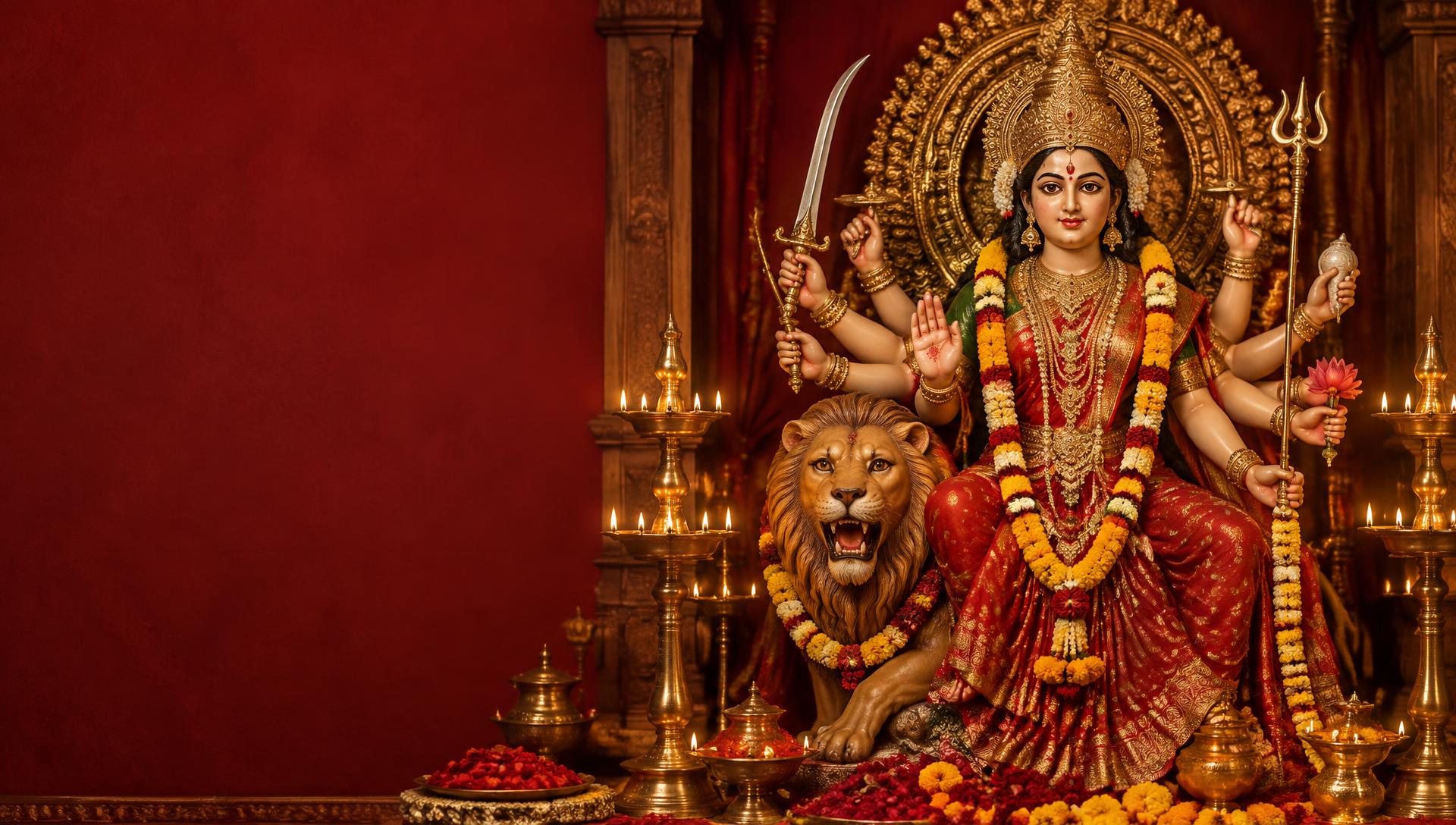
नवरात्रि पूजा विधि 2026 | Kalash & Daily Worship Guide
Shardiya Navratri dates, Kalash preparation and practical daily pooja steps in Hindi + English, with local muhurat guidance.
By Sanatani Store · 8 October 2026
Shardiya Navratri 2026 begins on 11 October and continues through 19 October. Vijayadashami follows on 20 October. For Ghatasthapana and Ashtami/Navami observances, check the Panchang for your city; a date range is not a universal muhurat.
शारदीय नवरात्रि 2026 कब है? 11 से 19 अक्टूबर तक नवरात्रि और 20 अक्टूबर को विजयदशमी है। कलश स्थापना का सही समय अपने शहर के पंचांग और परिवार की परंपरा से मिलाएँ। विदेश में रहने वाले परिवार केवल भारत का समय अपनी घड़ी पर लागू न करें।
This guide covers ordinary household preparation, not a substitute for a pandit-led ritual. Begin with the Navratri festival overview and keep the Hindi + English samagri checklist nearby.
Before Navratri: decide your worship plan
Decide whether your household will perform a simple daily pooja, establish a Kalash, read a text, arrange a complete Saptashati Path or include havan. These are not all automatically required. Use your family practice and consult your pandit where the ritual is unfamiliar.
- Choose a clean, stable place that will remain undisturbed.
- Arrange Maa Durga’s photo or murti respectfully; do not pour water on paper images or damage delicate materials.
- Confirm the local Ghatasthapana muhurat rather than relying on a generic social-media graphic.
- Discuss health, work and caring responsibilities before undertaking fasting or a long recitation commitment.
- Check which materials you already have; avoid unnecessary buying.
कलश स्थापना — Ghatasthapana preparation
1. Clean and arrange the worship space
Set up a chowki or stable surface and a clean cloth. Place offerings where they will not spill onto electrical fittings. A simple, safe setup is better than an overcrowded display. Keep lamps away from hanging chunris and decorations.
2. Prepare the grain vessel, if your tradition uses it
Drik Panchang’s Ghatasthapana guide describes a wide clay vessel, clean soil and Sapta Dhanya. Many households use barley according to local custom. Ask your pandit which seeds and vessel are appropriate; do not assume every household must use exactly the same grain mixture.
3. Arrange the Kalash materials
Common materials include a clean Kalash, clean water, sacred thread, betel nut, a coin, leaves and a coconut with husk. The details and order of adding items depend on the procedure you follow. Keep the samagri list as a preparation checklist, not a universal command.
4. Perform the invocation at the confirmed time
Ghatasthapana involves invoking the Devi according to the ritual. If you are unfamiliar with the procedure, receive guidance rather than copying incomplete mantras from memory. Confirm your Sankalp details with the pandit. Names and gotra should be accurate; if your gotra is unknown, tell them.
ध्यान रखें: सामग्री तैयार रखना और विधि के साथ कलश स्थापना करना अलग चरण हैं। पूजा का समय, मंत्र और क्रम अपने पंडितजी से पूछें। केवल एक सामान्य सूची पढ़कर पूर्ण विधि जान लेने का दावा न करें।
Daily Navratri pooja: a manageable routine
1. Begin calmly
Clean yourself and the worship space in a way suitable for your health and circumstances. Set aside a time your household can follow consistently. If morning worship is not possible, ask about a practical routine rather than abandoning devotion through anxiety.
2. Offer flowers and bhog according to custom
Offer clean flowers, fruit or freshly prepared food appropriate to your family tradition. Elaborate offerings and expensive purchases are not necessary for every household. Remember allergies and safe food preparation when sharing prasad.
3. Read, listen and reflect
Read a familiar prayer, a reliable translation or the text agreed in your Sankalp. If arranging a full Chandi Path, clarify its sequence and scope. Our Durga Saptashati preparation guide explains the distinction between a full text, preliminary prayers and personal reading.
4. Conclude with aarti safely
Keep the lamp on a stable heat-resistant surface and supervise it throughout. Never leave a flame unattended. Continuous-lamp vows should not be undertaken without safe continuous supervision. Finish respectfully and keep the area clean.
Nine forms of Maa Durga
The traditional worship order is Shailputri, Brahmacharini, Chandraghanta, Kushmanda, Skandamata, Katyayani, Kalaratri, Mahagauri and Siddhidatri.
नवदुर्गा के स्वरूप: शैलपुत्री, ब्रह्मचारिणी, चंद्रघंटा, कूष्मांडा, स्कंदमाता, कात्यायनी, कालरात्रि, महागौरी और सिद्धिदात्री।
These are listed in worship order. Tithis do not always match one calendar day each, so use the location-specific calendar for Ashtami, Navami and concluding observances. Colour lists and particular daily bhog traditions vary; they are not compulsory shopping requirements.
Ashtami, Navami and Kanya Pujan
Some families observe Kanya Pujan on Ashtami, others on Navami. Confirm your custom and local tithi before inviting anyone. If children attend, involve their parents or guardians, ensure consent and comfort, and serve food appropriate to allergies and age. Do not treat a fixed guest count or expensive gifts as a universal requirement.
For havan, consult a qualified pandit and use a suitable ventilated location with fire precautions. Apartment rules and household circumstances matter. A daily home-pooja guide does not imply that every family must perform a fire ritual.
Fasting and health
Vrat customs vary. Fasting must not replace prescribed treatment or cause dehydration. If you have diabetes, are pregnant, are unwell or take regular medication, ask a qualified clinician whether fasting is appropriate. Do not stop medicines for a ritual. Household devotion can be maintained without unsafe physical strain.
Pooja at home in Tricity or live online
For the existing Durga Saptashati Path service, enquire about your preferred date, exact recitation scope, samagri and quote. Sanatani Store offers pandit-at-home poojas only in Chandigarh, Panchkula and Mohali. Elsewhere in India and abroad, ask about live online participation and confirm both IST and your local time.
These guides do not advertise a new nine-day bundle or guarantee any particular result. Read the service details and agree what is included before booking.
Frequently asked questions
नवरात्रि 2026 में कलश स्थापना कब करें?
Shardiya Navratri begins on 11 October 2026. Exact Ghatasthapana timing depends on your location and Panchang. अपने शहर का मुहूर्त देखें और पंडितजी से समय की पुष्टि करें।
Can I perform simple daily worship without an elaborate setup?
Follow your family practice and seek guidance if you are unsure about formal Kalash rituals. Simple prayers and respectful offerings need not become an expensive shopping exercise.
क्या अष्टमी या नवमी को कन्या पूजन करना चाहिए?
Both observances occur in family traditions. Confirm the appropriate tithi and practice with your pandit instead of applying a universal rule from a generic calendar.
Is a full Durga Saptashati Path included in every Navratri pooja?
No. Daily worship, selected prayers and a full Saptashati Path are different scopes. Confirm the recitation and any havan or delivery inclusions before booking.
Can families abroad participate online?
Enquire for live online participation. Confirm your country, local time zone, preferred date, Sankalp details and the team’s availability. Do not assume a delivery deadline without confirmation.
Sources
Drik Panchang — Shardiya Navratri dates
Drik Panchang — Ghatasthapana preparation and vidhi
Next: Navratri samagri list, Durga Saptashati guide, or Navratri dates and pooja.
Arrange Durga Saptashati Path
Pandit at home in Chandigarh, Panchkula and Mohali, or live online elsewhere. Confirm your date, scope and samagri with our team.
Hindi + English guides
Prepare for Navratri
More on Festival Guides
नवरात्रि पूजा सामग्री सूची | Hindi + English Checklist
A practical Navratri checklist for Kalash preparation, daily offerings and optional havan, with Hindi names and sensible substitutions.
Why Rudrabhishek in Sawan multiplies your punya
The Shiv Purana calls Shravan the month when Shiv drank halahal and accepted the Ganga on his jata. Every offering in this month reaches him faster — here's why.
दुर्गा सप्तशती पाठ: विधि और तैयारी | Durga Saptashati Guide
Understand the 700-verse Devi Mahatmya, prepare for Chandi Path, and find practical Hindi + English answers for Navratri worship.